
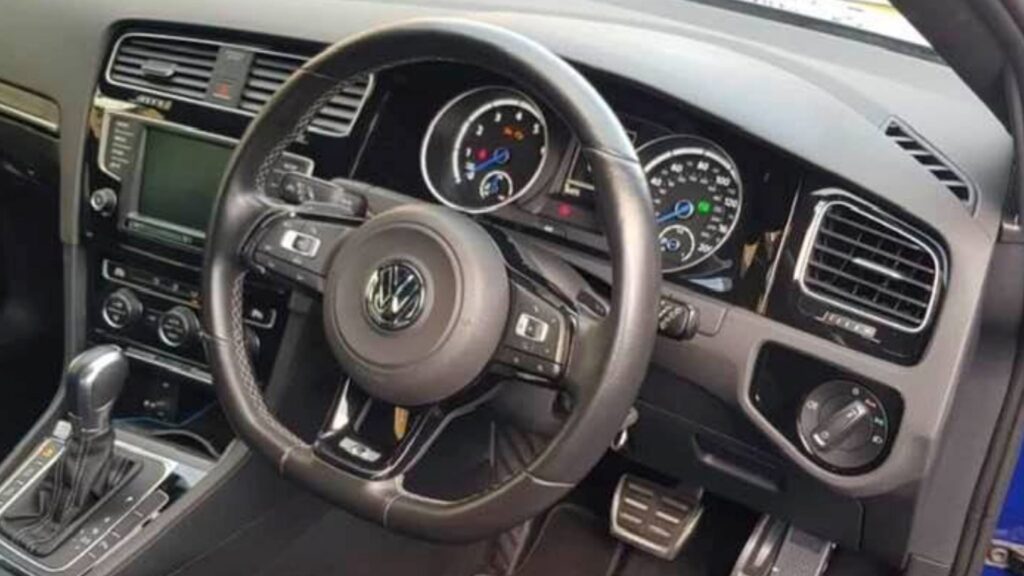
That amber ABS warning light can be easy to dismiss, especially if your car still seems to brake fine. But ignoring it is rarely the right call. The anti-lock braking system (ABS) is one of your vehicle’s most important safety features, and when that light appears, your car is telling you something has changed.
For drivers across Bradford, Leeds, and West Yorkshire, this guide breaks down the six most common reasons your ABS light may be on and what they actually mean for your safety on the road.
First, a Quick Word on What ABS Actually Does
Anti-lock brakes stop your wheels from locking up during emergency stops or on slippery surfaces. Using sensors at each wheel, the system monitors speed and detects when a wheel is about to skid. When it does, it rapidly modulates brake pressure faster than any human could manage to keep the wheel rolling and your steering effective.
The keyword is control. ABS doesn’t always shorten stopping distance, but it allows you to steer around obstacles while braking, which in many situations is far more valuable.
The 6 Most Common Reasons Your ABS Light Is On
1. A Faulty or Damaged Wheel Speed Sensor
This is the most frequent culprit. Your car has a wheel speed sensor at each corner, constantly sending data to the ABS control module. If one fails, the system loses confidence in its readings and disables itself as a precaution.
Sensors can fail in several ways: physical damage from road debris, corrosion over time (common in Yorkshire winters), or wiring issues caused by vibration or chafing.
A diagnostic scan will typically show exactly which sensor has failed and whether it’s the sensor itself, the wiring, or the tone ring that sits around your wheel bearing.
How to fix it: A diagnostic scan identifies the exact sensor and fault type. In most cases, the faulty sensor is replaced, a straightforward job once the affected wheel is located. If it’s a wiring issue rather than the sensor itself, the damaged section of the loom is repaired or replaced. The ABS light should clear once the repair is confirmed and the fault code is reset.
2. A Dirty or Damaged Tone Ring
The tone ring (also called an ABS ring or reluctor ring) is a toothed metal ring that rotates with your wheel. The sensor reads the gaps between its teeth to calculate wheel speed.
When the ring is coated in brake dust, road grime, or corrosion, or when a tooth is physically missing or damaged, the sensor gets inconsistent readings. The ABS module may then trigger a fault.
This is particularly worth knowing if you’ve recently had brake work or a wheel bearing replaced, as tone rings can be disturbed or replaced incorrectly during those jobs.
How to fix it: If the ring is simply dirty or corroded, cleaning it thoroughly often resolves the fault. If a tooth is chipped or missing, the tone ring needs replacing; it’s usually pressed onto the wheel bearing or axle and is replaced as a standalone component. A scan confirms the fix has worked before the job is signed off.
3. A Problem with the ABS Control Module
The ABS control module is the brain of the system. It receives data from all four wheel sensors and decides when and how to modulate braking. If the module itself has a fault, whether from electrical damage, water ingress, or internal component failure, the entire ABS will be disabled.
Module problems tend to produce more complex fault codes and are often accompanied by other dashboard warnings. They’re less common than sensor faults but more involved to diagnose and repair.
A common misconception is that ABS module faults always mean expensive replacement. In many cases, the module can be tested, reprogrammed, or repaired rather than replaced outright.
How to fix it: Dealer-level diagnostics can read the module’s internal fault data and test its communication with the wider system. Depending on the fault, the solution may be reprogramming the module, repairing damaged connectors or wiring to it, or, where the module itself has failed internally, sourcing and coding a replacement. A proper diagnostic first saves time and avoids unnecessary parts replacement.
4. Low Car Battery or Voltage Issues
Here’s one that surprises many people. Your ABS relies on a stable electrical voltage to function correctly. When a battery is weak, perhaps struggling in cold weather, or when there’s a charging system issue, the ABS module may detect a voltage anomaly and throw a fault code.
If your ABS light appeared around the same time as other electrical gremlins, dim lights, or difficulty starting, the battery or alternator is a logical starting point.
Older vehicles and cars that have sat unused for extended periods are especially susceptible. A battery health check is quick, inexpensive, and can sometimes resolve an ABS warning before any deeper investigation is needed.
How to fix it: Start with a battery health and charging system test. If the battery is weak, replacing it often clears the ABS fault entirely, no further work needed. If the alternator is undercharging, that’s the fix instead. Once the voltage is stable, the stored fault code is cleared, and the system is retested. This is one of the more satisfying fixes: simple cause, clean resolution.
5. Brake System Issues Beyond ABS
Your ABS doesn’t exist in isolation. It’s connected to the wider braking system, and certain brake-related problems can trigger the ABS warning.
Low brake fluid is one example. If fluid drops below the minimum level, which can happen due to a leak or because the brakes have worn significantly, some vehicles will illuminate both the ABS and brake warning lights.
Important: If both your ABS light and brake warning light are on at the same time, treat this as a serious issue. Pull over when safe to do so and seek assistance. Do not assume your brakes are working normally in this situation.
Worn hydraulic components, a failing brake pump, or issues with brake callipers can all influence ABS readings and behaviour.
How to fix it: The fix depends on what’s causing the fluid loss or pressure issue. If it’s worn brake pads causing low fluid, replacing the pads and topping up the fluid is the starting point. If there’s a leak in the hydraulic system, from a calliper, brake line, or master cylinder, that component needs repairing or replacing. Once the underlying brake issue is resolved, the ABS typically settles back to normal operation.
6. A System Self-Test That Didn’t Complete Correctly
When you start your car, the ABS performs a self-diagnostic check. Under normal circumstances, the light comes on briefly and then goes off once the check passes. If the light stays on after the engine starts, the system has detected something it’s not satisfied with.
Occasionally, particularly in cold conditions or after a battery disconnect, the system may need a short drive cycle to complete its checks properly. However, a light that stays on consistently is not something to dismiss as a “quirk.”
Modern diagnostic tools can access the ABS module’s fault memory and read exactly what triggered the warning, which removes the guesswork entirely.
How to fix it: If the light appeared after a battery change or disconnect, completing a short drive cycle at varying speeds often allows the system to re-run its self-test and clear naturally. If the light persists, a diagnostic scan reads the stored code and identifies the specific check that failed, pointing directly to the component or circuit at fault. From there, the fix follows the relevant root cause from the reasons above.
Is It Safe to Drive with the ABS Light On?
In most cases, your regular braking will still function even with the ABS light on; the system simply disables the anti-lock function and reverts to conventional braking. So in dry conditions with careful driving, you’re unlikely to notice much difference.
However, the risk increases significantly if:
- Road conditions are wet, icy, or slippery
- You need to make an emergency stop
- Other warning lights are illuminated alongside ABS
- You notice any unusual feel or behaviour from your brakes.
These are the exact situations where ABS is designed to protect you. Without it active, you’re more vulnerable to wheel lock and loss of steering control.
What to Do When Your ABS Light Comes On
The most useful first step is a diagnostic scan. This reads the fault code stored in your ABS module and tells you exactly which component or circuit has flagged an issue. Without this step, diagnosis is largely a matter of guesswork.
The good news is that many ABS faults, particularly sensor-related ones, are straightforward to identify and resolve once the fault code is known. A mobile diagnostic service means the scan can come to you, whether you’re at home, at work, or in a car park.
The less useful approach is clearing the fault code and hoping the light doesn’t return. If it does, the underlying issue hasn’t been addressed, and you’re back to driving without ABS active.
A Note on Bradford Roads and ABS Demands
West Yorkshire roads create specific demands on braking systems. Bradford’s terrain, with its hills and varied road surfaces, means ABS can engage more frequently than on flat, dry motorways. The region’s weather, particularly through autumn and winter, puts additional load on wheel speed sensors, which are exposed to road salt, standing water, and debris.
Routine checks aren’t just a precaution; for many vehicles in this region, they’re genuinely good practice.
Understanding what your ABS warning light is telling you puts you in a much better position to respond sensibly, rather than either panicking or ignoring it. In most cases, with the right diagnostic approach, the cause is identifiable, and the fix is manageable.
If your ABS light is on and you’re based in Bradford, Leeds, or elsewhere in West Yorkshire, a mobile diagnostic check is often the quickest and most practical next step.
Frequently Asked Questions
1. Can I drive my car in Bradford with the ABS light on?
Yes, normal braking works, but ABS is disabled; extra caution is needed on wet, icy, or hilly roads.
2. How long does an ABS diagnostic take?
A scan usually takes 15–30 minutes; repairs depend on the fault.
3. Will my car fail its MOT with the ABS light on?
Yes, a constantly lit ABS light is a major defect and will result in the vehicle failing the MOT.
4. My ABS and brake lights are both on. Is that different?
Yes, it signals a serious brake issue; stop driving and get professional help.
5. Do you offer mobile ABS diagnostics across West Yorkshire, not just Bradford?
Yes, mobile diagnostics cover Bradford, Leeds, Halifax, Huddersfield, and surrounding areas.
6. What’s the difference between an ABS sensor fault and an ABS module fault?
A sensor fault affects a wheel sensor and is simpler to fix; a module fault affects the central unit and needs a different repair.
7. Can a weak battery really cause my ABS light to come on?
Yes, low or unstable battery voltage can trigger ABS faults.
8. How often should ABS sensors be checked on older vehicles in West Yorkshire?
For vehicles over five years old, check sensors during routine brake services to prevent faults.
What the ABS Warning Light Means
Understanding what your ABS warning light is telling you puts you in a much better position to respond sensibly, instead of panicking or ignoring it. In most cases, with the right diagnostic approach, the cause is identifiable, and the fix is manageable.
If your ABS light is on and you’re based in Bradford, Leeds, or elsewhere in West Yorkshire, a mobile diagnostic check is often the quickest and most practical next step.
At Mobile Car Diagnostics, we offer ABS diagnostics and auto electrical services across Bradford and West Yorkshire, and we come to you.
Contact Us
Call us: 07513 637663
Email: info@mobilecardiagnostics.co.uk