
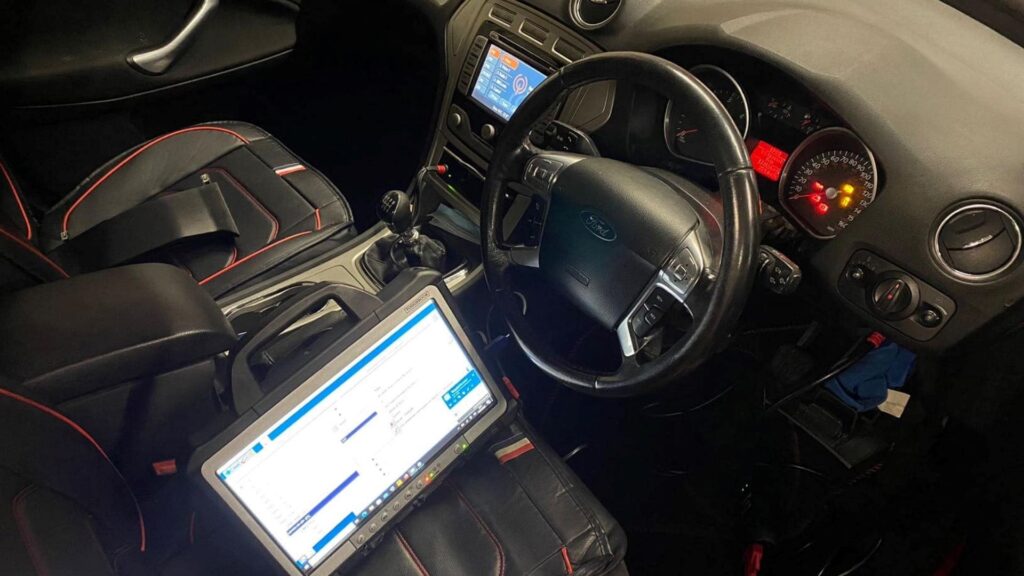
You’ve just had your diesel injectors replaced. The mechanic said everything went smoothly. But now your car idles roughly, the exhaust has a faint haze, and your fuel bills have quietly crept up. Nothing dramatic, but something clearly isn’t right.
In most cases, what’s happening has nothing to do with the quality of the parts or the skill of the person who fitted them. The issue is something most car owners have never been told about: diesel injector coding.
Understanding it doesn’t require an engineering degree. It just requires knowing how modern diesel engines think.
“A diesel injector isn’t just a spray nozzle; it’s a precisely calibrated component with its own digital identity. Ignoring that identity has consequences.”
Why Modern Diesel Injectors Are Different
Diesel engines from the mid-2000s onwards and virtually all diesels built today use what’s called a common rail fuel system. Rather than each injector working independently, they all draw from a shared high-pressure fuel rail, with the engine’s ECU (Electronic Control Unit) precisely controlling when and how much fuel each injector delivers, down to microsecond-level timing.
To do this accurately, the ECU needs to know the exact characteristics of each injector fitted to the engine. No two injectors are manufactured identically. Each one carries tiny tolerances, slight differences in needle lift, spray pattern, and flow rate that are measured and assigned a unique calibration code during manufacturing.
That code needs to be programmed into the ECU so the engine management system can compensate for those individual differences and deliver fuel with precision. Without it, the ECU is effectively guessing, and in a high-performance diesel engine, guessing is expensive.
Technical Note: Delphi injectors often carry their calibration code on a sticker on the injector body itself. Others have the code etched into the solenoid. In both cases, the code must be read and entered into the ECU during programming; it cannot be generated by diagnostic software alone.
When Diesel Injector Coding Becomes Necessary
Diesel injector coding isn’t something that requires regular attention. It becomes critical in specific situations, and when those situations arise, skipping it almost always causes problems.
The most common trigger is a straightforward injector replacement. Whether you’re replacing one injector after a failure, all four after high mileage, or the entire injection pump assembly, any new component needs to be introduced to the ECU. Similarly, if a second-hand injector is being installed, even a genuine, working unit from another vehicle, it carries calibration data for a different engine. Without recording, it will perform incorrectly in your car.
ECU replacement or remapping can also make recording necessary. If the ECU itself is swapped out, the stored injector calibration data goes with it. The new ECU starts without that information and needs to be brought up to speed.
What Poor Diesel Injector Coding Actually Feels Like
Because the symptoms develop gradually or only appear under certain conditions, many drivers don’t immediately connect them to an injector programming issue. They assume it’s something else: a blocked DPF, a sensor fault, or normal wear. Here are the most common signs that something isn’t right:
Exhaust Smoke Black or grey smoke, especially on acceleration or cold starts, often indicates incorrect fuel quantity delivery, a direct sign of miscalibrated injector timing.
Worse Fuel Economy When injectors over-deliver or under-deliver fuel, the ECU compensates by adjusting fuel further, creating a cycle of inefficiency that quietly drains the tank.
Rough Idle An uneven, lumpy idle at traffic lights is one of the clearest signs that cylinder balance is off, often because one injector’s calibration hasn’t been communicated to the ECU.
Difficult Starting Cold start difficulties in particular can point to injector timing issues. The ECU relies heavily on calibrated data during cold cranking when fuel delivery margins are tight.
Engine Warning Light Fault codes related to injector contribution, cylinder misfires, or fuel trim corrections often appear when the ECU is struggling to balance an uncoded injector.
Loss of Power Noticeable flat spots or reduced performance on motorway inclines are typical when the ECU is running in a compensated mode to manage an unrecognised component.
The Diesel Injector Coding Process: What Actually Happens
Diesel injector coding is a precise electronic procedure, not a generic diagnostic scan. It requires specialist equipment that can both read the injector’s calibration data and write it directly to the engine’s ECU. The process is different for every vehicle platform, which is why only technicians with the right manufacturer-level or OEM-equivalent tools can perform it correctly.
Here’s the general sequence for a typical diesel injector coding session:
Injector Identification
Each injector’s unique calibration code is retrieved either from the manufacturer’s label, the solenoid body, or, in some cases, via the diagnostic tool itself. This code is the injector’s “fingerprint”.
ECU Connection
The diagnostic tool connects to the vehicle’s ECU via the OBD-II port. For some platforms (Ford FDRS, VW/Audi ODIS, Mercedes XENTRY), a live internet connection to the manufacturer’s server is also required.
Code Programming
The calibration data is written to the ECU for each injector position. The ECU maps this data to cylinder-specific fuelling adjustments compensating for each injector’s individual tolerances in real time.
Verification & Adaptation
The ECU runs a post-programming check. On some platforms, a short driving cycle or idle adaptation process is needed for the ECU to confirm correct cylinder balance across all fitted injectors.
Important: Industry best practice is always to code injectors before fitting them to the engine. This allows the ECU to verify it accepts the calibration code, confirming the correct injector type. If the ECU rejects the code before installation, the injector can be returned or exchanged before any physical work has been done.
Why Diesel Injector Coding Was Once a Dealership-Only Procedure
Ten years ago, if you needed diesel injector coding, your only practical option was the main dealer. The reason was simple: the required programming tools, Ford IDS/FDRS, VW/Audi ODIS, Mercedes-Benz XENTRY, were proprietary systems that manufacturers deliberately made difficult (and expensive) to access outside their dealer networks.
The result was that a relatively quick programming job came with main dealer labour rates, sometimes alongside minimum booking windows, and the inconvenience of dropping your car off and collecting it later. For many drivers, this meant delaying the repair or paying far more than the work itself warranted.
The landscape has changed significantly. Independent technicians with the right equipment can now perform the same manufacturer-level programming that dealers carry out without the associated costs or waiting times. The tools are the same; the difference is where they’re brought to you.
A Note on Injector Pump Coding
While diesel injector coding handles the individual calibration of fuel delivery at each cylinder, injector pump coding refers specifically to programming carried out when the high-pressure fuel pump itself is replaced or relearned. Older common rail systems with mechanical pump governors required different procedures; modern vehicles often need the pump to undergo an adaptation cycle with the ECU to establish correct pressure trim values.
The symptoms of a miscoded pump are similar to poor fuel economy, rough running, and smoke, but they tend to affect all cylinders equally rather than producing the cylinder-specific imbalance you’d see with a single uncoded injector. Correct diagnosis, using live data from a professional diagnostic tool, is the most reliable way to tell the difference.
“The tools that were once locked inside dealerships are now mobile. What matters is who’s holding them and whether they know what they’re doing.”
Frequently Asked Questions About Diesel Injector Coding
Does every injector replacement need coding?
Most common rail diesels post-2005 do; older mechanical injectors usually don’t. Check the service docs or a technician.
Can I drive without diesel injector coding after a replacement?
Technically, yes, but the engine may run rough, lose efficiency, and trigger fault codes.
How long does diesel injector coding take?
About 20–45 minutes, depending on the vehicle and number of injectors; usually under an hour.
Is diesel injector coding the same for all diesel brands?
The principle is the same, but software and tools vary by manufacturer (Ford FDRS, VW ODIS, Mercedes XENTRY/DAS, BMW ISTA).
Can used or second-hand injectors be recorded?
Yes, if the calibration code is legible and the injector is in good condition.
Will diesel injector coding fix poor fuel economy on its own?
Only if the issue is due to uncoded injectors; other problems may require additional diagnostics.
Does Mobile Car Diagnostics come to me for diesel injector coding?
Yes, fully mobile across Bradford and West Yorkshire, including Leeds, Halifax, Huddersfield, Keighley, Dewsbury, Batley, Pudsey, Heckmondwike, and Harrogate.
What Diesel Injector Coding Means for Diesel Owners
Diesel injector coding is a good example of how modern vehicle technology has raised the bar on what “correct” maintenance actually looks like. A diesel engine is no longer a mechanical system with a few electronic accessories bolted on; it’s an integrated electronic and mechanical system where software precision matters as much as the quality of the components themselves.
For drivers in Bradford and across West Yorkshire, this is relevant in a practical way. Independent repair has become more accessible, not less but the skill gap between a competent technician and the right technician has widened. The question to ask isn’t just whether someone can replace the part. It’s whether they have the software to make the part work correctly once it’s fitted.
That’s the insight most garage price comparisons miss entirely.
Contact Us
Call us: 07513 637663
Email: info@mobilecardiagnostics.co.ukFollow Us