
Most modern cars are deliberately held back from the factory. Manufacturers tune engines to meet a broad range of fuels, climates, and markets, which means your car’s ECU is probably running well below its real potential. An ECU remap changes that by reprogramming the software that controls how your engine behaves.
This guide walks through what ECU remapping actually is, how it works, what the different stages mean, and what Bradford drivers should realistically expect from a mobile tuning service. No sales pressure, just clear, honest information to help you make a well-informed decision.
What Is an ECU and Why Does It Matter?
The ECU, or Engine Control Unit, is essentially the brain of your car. It constantly monitors sensors throughout the vehicle and adjusts everything from fuel injection timing to turbo boost pressure and throttle response. Think of it as a very precise rulebook that your engine follows thousands of times a second.
The factory settings inside that rulebook are conservative by design. Engineers build in safety margins for lower-grade fuel, extreme temperatures, and varying maintenance standards. For a driver in Bradford using quality fuel and keeping on top of servicing, those margins are often unnecessary, and that’s where mobile car tuning creates genuine headroom.
A remap doesn’t add or remove any physical parts. It rewrites the software map that governs how the engine operates, allowing it to use more of what’s already there. Done properly, mobile car tuning is one of the most cost-effective improvements a driver can make.
The Stage System Explained
Mobile car tuning is usually described in stages. Each stage refers to how far the tune has been taken and what supporting hardware, if any, is needed alongside the software changes.
Stage 1: Software Only
The starting point for most remaps. A Stage 1 tune works entirely within the existing hardware; no physical modifications are required. It adjusts parameters like boost pressure, ignition timing, and fuelling to extract more performance from the standard engine.
What drivers typically notice:
- Sharper throttle response, the engine reacts more immediately to your inputs
- More mid-range pull, particularly useful for motorway overtaking
- Improved fuel economy on steady cruising for diesel vehicles
- Smoother power delivery across the rev range
Stage 2: Hardware & Software Combined
Stage 2 involves physical upgrades alongside the remap, typically an uprated exhaust, a performance air intake, or an upgraded intercooler. The software is then written around these changes to make use of the improved airflow and cooling.
This is worth considering if you want a more significant performance step, or if you’ve already fitted performance parts that the factory ECU isn’t calibrated to handle properly.
Stage 3: Full Performance Build
Stage 3 is full engine build territory, upgraded turbos, fuelling systems, internals, and a bespoke tune to match. This is typically for enthusiasts building dedicated performance or track vehicles rather than everyday drivers.
Diesel vs Petrol Remapping: Key Differences
Both diesel and petrol engines benefit from mobile car tuning, but the gains look different, and the reasons for tuning often differ.
| Diesel Remapping | Petrol Remapping |
| Typically 20–40% more torque | Usually 10–20% power increase |
| Fuel efficiency gains of up to 15% MPG | Focused on outright performance gains |
| Typically, 20–40% more torque | Turbocharged petrol engines respond best |
Diesel drivers who do a lot of motorway miles often find that a good Stage 1 remap pays for itself through fuel savings over the course of a year. That’s a practical benefit worth factoring in.
What Happens During a Mobile Remap?
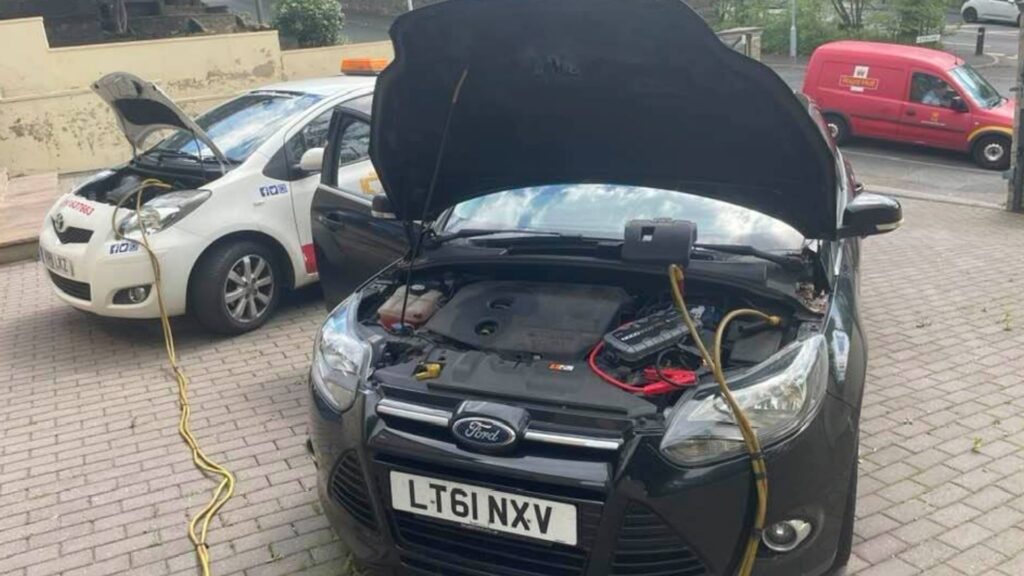
The process is more straightforward than many drivers expect. Mobile car tuning brings the equipment to your home or workplace, so there’s no need to arrange collection or spend time at a garage.
Here’s what the process typically looks like:
- Pre-remap diagnostic check: any existing fault codes are identified before any tuning begins. This protects both the vehicle and the integrity of the tune.
- ECU read: a specialist interface connects to the vehicle’s OBD port (or directly to the ECU for some vehicles) to read the original factory map.
- Map modification: the file is modified by the tuner. The key parameters adjusted include fuel injection pressure and duration, boost levels on turbocharged engines, ignition timing, rev limits, and throttle sensitivity.
- Map write: the revised software is loaded back to the ECU.
- Post-remap check: the vehicle is checked again after the write to confirm everything has completed cleanly.
The whole process typically takes between one and three hours, depending on the vehicle and the complexity of the tune. Because licensed, professional tools are used throughout, the process is non-destructive; the original map can always be restored if needed.
Beyond Performance: Other Things a Remap Can Resolve
While many people think of mobile car tuning purely in terms of power output, ECU software can be adjusted to address some practical issues that affect everyday driving:
- DPF & EGR solutions: diesel particulate filter and exhaust gas recirculation issues are a common frustration for drivers doing mostly short journeys. These can be addressed through software.
- AdBlue & NOx sensor solutions: for vehicles with emissions system warnings that are creating ongoing problems.
- Start/stop system disable: if the automatic start/stop feature causes issues or simply isn’t to your preference.
- Swirl flap & GPF/OPF solutions: addressing common failure points on certain VAG and BMW engines.
- Hot and cold start solutions: Some vehicles develop specific starting issues that can be resolved through calibration.
- Lambda/O2 sensor solutions: software adjustments that address sensor-related fault codes.
Specialist Programming for Ford, VAG & Mercedes
Different vehicle manufacturers use different ECU systems, and the software tools needed to work with them properly are manufacturer-specific. Three of the most common platforms are worth understanding:
Ford FDRS-IDS
Ford’s dealer-level diagnostic and programming system. Required for proper module programming on modern Ford vehicles, including feature coding and ECU calibration.
VW-VAG ODIS (VW, Audi, Seat, Skoda)
The Volkswagen Group’s Online Diagnostic System covers the full VAG family. It enables VCDS/VAGCOM coding, adaptations, and module-level programming for VW, Audi, Seat, and Skoda vehicles, useful for everything from enabling hidden features to recalibrating replacement parts.
Mercedes’ own diagnostic platform is required for full access to the complex electronics in modern Mercedes vehicles. This includes SCN coding for replacement parts, module initialisation, and feature activation such as Apple CarPlay and navigation updates.
What to Check Before Booking a Remap
Mobile car tuning can only be as good as the engine it’s built around. Before committing to any tuning work, there are a few things worth thinking through:
- Service history up to date? Tuning a poorly maintained engine compounds existing problems rather than solving them.
- Any existing fault codes? These should be understood and resolved before remapping begins.
- Turbo condition? On turbocharged vehicles, a worn turbo will limit the gains and may be stressed further by a tune.
- Fuel quality? Using good-quality fuel matters more after a remap, particularly on Stage 2+ tunes.
- Insurance? It’s worth informing your insurer of any modifications, including a remap.
Why Mobile Tuning Works Well for Bradford Drivers
The practical advantage of mobile car tuning is straightforward: the work comes to you rather than requiring you to plan around drop-off and collection times. For people in Bradford and across West Yorkshire, whether in Keighley, Halifax, Dewsbury, Huddersfield, or surrounding areas that saves real time and hassle.
There’s also a quality point worth making. A mobile specialist typically uses the same dealer-level equipment as a main garage, but without the overheads that come with running a fixed premises. That can translate into better value without any compromise on the quality of tools or expertise.
For drivers who need mobile car tuning alongside a full diagnostic check, auto electrical work, or a DPF regeneration, being able to have everything handled in a single visit at home makes the whole process considerably more convenient.
Frequently Asked Questions
Will a remap void my manufacturer’s warranty?
It depends on the vehicle and warranty status; older cars aren’t usually affected, but newer cars may be, so check with your tuner first.
Can a remap be reversed?
Yes, reputable tuners always save the original ECU map, which can be restored at any time.
Is it safe for the engine long-term?
Yes, if properly calibrated on a healthy engine, issues usually come from poor-quality tuning or existing engine problems.
How long does the remap last?
Remaps are permanent software changes; only revisit if you upgrade hardware or want a revised tune.
Which vehicles can be remapped?
Most modern petrol and diesel cars, vans, and light commercial vehicles; gains are smaller on naturally aspirated engines.
Does it work for both automatic and manual gearboxes?
Yes, mobile car tuning affects the engine ECU and works with all transmission types.
What’s the difference between a generic map and a custom remap?
Generic maps are pre-written for a vehicle class, while custom remaps read your ECU first and tailor the calibration to your engine.
How do I know the tuner is using licensed tools?
Ask directly, professional tuners in Bradford and West Yorkshire use licensed software like Flex, FDRS, ODIS, or Mercedes STAR.
Making Informed Decisions About ECU Remapping
Mobile car tuning is one of those modifications that rewards patience and understanding. Knowing the difference between stages, understanding your vehicle’s condition, and working with a specialist who uses professional equipment all contribute to getting the most out of it.
For Bradford drivers, the combination of mobile service delivery and specialist diagnostic capability means that mobile car tuning, coding, and full electrical diagnostics can all be handled without the disruption of a garage visit. Whether you’re looking to improve performance, recover fuel economy, or resolve a specific ECU-related issue, the technology and expertise to do it properly are available locally.
Contact Us
Call us: 07513 637663
Email: info@mobilecardiagnostics.co.uk