
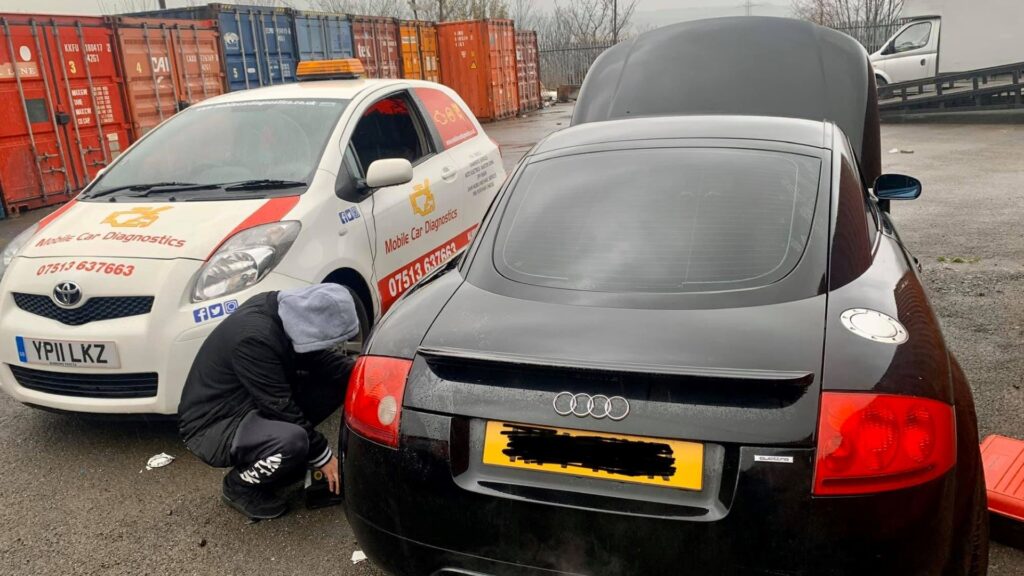
Buying a used car can be exciting, but it can also be one of the most stressful purchases you make if you skip the right checks. A pre-purchase car inspection report is one of the most practical tools available to any car buyer, whether you’re picking up your first vehicle or adding to a collection.
In Bradford and across West Yorkshire, local buyers often rely on trusted mobile diagnostics specialists to carry out these checks before any money changes hands. This guide explains what a thorough inspection report should cover, what the findings actually mean, and how to use the report to make a confident decision.
What Is a Pre-Purchase Car Inspection Report?
A pre-purchase car inspection report is a structured assessment of a vehicle’s condition carried out before you agree to buy it. Unlike a basic visual check, a proper inspection uses specialist diagnostic equipment to read data directly from the car’s onboard systems.
The report documents what was checked, what was found, and, importantly, what those findings mean in plain English. A quality report doesn’t just list technical codes; it tells you whether those codes represent a serious problem, a minor quirk, or something to monitor over time.
Think of it as a health check for the car, carried out by someone who has no reason to hide anything from you.
Why the Report Matters More Than the Test Drive
A test drive tells you how a car feels. An inspection report tells you what’s actually happening inside it.
Many faults, particularly electrical ones, don’t produce any noticeable symptoms during a short drive. A car might feel smooth on the road while quietly storing fault codes related to the airbag system, the ABS, or the engine management unit. These are the kinds of issues that only show up when the right diagnostic equipment is connected.
Experienced inspectors also look at areas commonly overlooked by private sellers: suspension components, brake pressure, tyre condition, bodywork consistency, and interior electronics. These form part of a complete picture that a test drive simply cannot reveal.
Key Areas a Pre-Purchase Car Inspection Report Should Cover
Not all inspections are equal. A thorough pre-purchase car inspection report in Bradford should include the following areas:
1. Full ECU Diagnostic Scan
The ECU (Engine Control Unit) is the car’s central computer. A full scan reads fault codes stored across all electronic modules, not just the engine, but also transmission, braking, body, and comfort systems. This is the foundation of any honest inspection.
The report should list what codes were found and whether they are active (currently present) or historical (previously logged but no longer showing). Both matter: active faults need immediate attention, while historical codes may point to intermittent problems or past issues that haven’t been fully resolved.
2. Airbag and SRS System Check
Airbag faults are among the most important and most commonly hidden issues in used cars. If a vehicle has been in an accident, the airbag system may have been triggered, reset cheaply, or bypassed entirely. An inspection using dedicated airbag diagnostic tools will reveal whether the system has crash data stored, whether airbags have been deployed, and whether the SRS (Supplemental Restraint System) is currently active and functional.
A car with a compromised airbag system can still pass an MOT, which makes this check all the more important to carry out independently.
3. ABS System Diagnostics
The anti-lock braking system is a critical safety feature that prevents wheel lockup during emergency stops. ABS faults can be caused by damaged wheel speed sensors, faulty control modules, or wiring issues, none of which are visible from the outside.
The report should confirm whether the ABS is functioning correctly and flag any stored fault codes.
4. CAN-Bus System Report
Modern vehicles use a CAN-Bus (Controller Area Network) system to allow different electronic modules to communicate with each other. A CAN-Bus check reveals how well these systems are talking to each other, and can identify communication faults that affect multiple vehicle functions, things that might not yet show up as warning lights but indicate underlying issues.
5. Auto-Electrical Fault Finding
Electrical faults are the most common cause of costly surprises in used cars and among the hardest to spot without proper equipment. This part of the inspection covers wiring integrity, sensor function, battery and charging system health, and any anomalies in the vehicle’s electrical network.
The report should note any circuits that are underperforming, faulty, or at risk of failure.
6. Mechanical and Structural Checks
A good inspection doesn’t stop at the electronics. Physical inspection should cover:
- Suspension components and vehicle fault finding
- Brake pressure and pad condition
- Tyre depth, condition, and pressure
- Exhaust system integrity
- Bodywork consistency (to identify accident repair or mismatched panels)
- Windscreen for cracks or chips
- Interior functionality, including electrics, windows, and lights
- Automatic gearbox health (where applicable)
- Rim and wheel condition
7. Honest Recommendations and Tailored Advice
A good inspection report doesn’t just list what was found; it explains what it means for you. Not every fault is a dealbreaker. Some issues are minor and inexpensive to fix. Others should prompt serious negotiation or cause you to walk away entirely.
What separates a useful report from a generic one is honest, tailored guidance from someone who has actually inspected that specific vehicle. Watch out for templated reports that give vague summaries without explaining the significance of each finding.
How to Read a Pre-Purchase Car Inspection Report
When you receive the report, here’s a simple framework for making sense of it:
- Active fault codes: Require immediate attention. Ask the seller to clarify what caused them and what repairs have been done.
- Historical fault codes: May indicate past problems. Worth discussing, but not necessarily a reason to walk away on their own.
- Safety-critical findings: Anything related to brakes, airbags, steering, or tyres should be resolved before purchase not after.
- Minor wear items: Things like brake pads near their limit or tyres approaching replacement are normal for used cars. Factor the repair costs into your negotiation.
- Bodywork inconsistencies: Mismatched panel gaps, paint differences, or unusual welding may indicate undisclosed accident history. This should always be investigated further.
What Makes Bradford Different: Local Context Matters
West Yorkshire roads have their own character. Bradford, Leeds, Halifax, Huddersfield, and the surrounding areas see a wide variety of driving conditions from urban stop-start traffic to rural moorland routes. These conditions place different stresses on vehicles than motorway-heavy use.
Local inspectors who are familiar with the region understand what problems to look for on vehicles driven in these conditions. They’ll pay closer attention to suspension wear from pothole-heavy roads, brake performance on hilly terrain, and DPF (Diesel Particulate Filter) health in vehicles used mainly for short urban journeys, a common pattern in Bradford.
A mobile inspection service also means the check happens at the seller’s ideal location. You get a full picture of where the car has been kept, how it’s been stored, and the environment it operates in.
Common Faults Found in Pre-Purchase Car Inspections (and What They Mean)
Here are some of the most frequently identified issues in pre-purchase car inspections across West Yorkshire:
- DPF issues on diesel vehicles: Common in cars used mainly for short trips. Can be expensive to resolve if left untreated.
- Airbag warning lights: Sometimes cleared without fixing the underlying fault. Inspection reveals whether the system is genuinely safe.
- Battery and alternator problems: Often masked by recent charges. A diagnostic check reveals the true state of the charging system.
- Suspension wear: Particularly common on older vehicles and those used on rough roads. Affects handling and safety.
- Crash data in airbag modules: Indicates previous collision history, sometimes not disclosed by sellers.
- Gearbox fault codes: Automatic gearbox repairs are among the most expensive in automotive servicing. Early detection is crucial.
Frequently Asked Questions
How long does a pre-purchase car inspection take?
A thorough inspection typically takes between 45 minutes and 1.5 hours, depending on the vehicle and what’s found. Mobile inspections are carried out at the seller’s location, so there’s no need to transport the vehicle to a garage.
Can the seller clear fault codes before I arrive?
Clearing fault codes only removes the warning light; it doesn’t fix the underlying problem. A quality diagnostic scan reveals not just current codes but also freeze frame data and system readiness monitors, which can indicate whether codes have recently been cleared. Experienced inspectors know what to look for.
Do I need an inspection if the car has a valid MOT?
Yes. An MOT tests whether a vehicle meets a minimum roadworthiness standard at a specific point in time. It does not check many electrical systems in depth, does not reveal crash data, and does not assess the overall condition the way a pre-purchase car inspection does. An MOT is a legal requirement, and an inspection is peace of mind.
What if the inspection finds problems?
Finding problems isn’t necessarily bad news; it gives you options. You can use the report to negotiate a lower price, ask the seller to fix the issues before purchase, or make an informed decision to look at a different vehicle. The cost of an inspection is almost always far less than the cost of an unexpected repair.
Is a pre-purchase inspection worth it for cheaper cars?
Often, yes, sometimes more so. Budget vehicles carry a higher risk of deferred maintenance or undisclosed issues. The relative cost of an inspection is also lower on a cheaper car, and the protection it offers is the same regardless of purchase price.
Can a mobile inspector come to me in Bradford or across West Yorkshire?
Yes. Mobile inspection services travel to the seller’s location across Bradford, Leeds, Halifax, Wakefield, Huddersfield, Dewsbury, Batley, and throughout West Yorkshire. This means you get the inspection done in context at the seller’s address, where the car normally lives.
Making the Most of Your Inspection Report
A pre-purchase car inspection report is only useful if you know how to use it. A few practical tips:
- Book the inspection before agreeing to buy, not after. You want findings to inform your decision, not complicate it.
- Be present if possible. Seeing the inspection happen gives you context that a written report alone can’t provide.
- Ask the inspector to explain any findings you don’t understand. A good inspector should be able to translate technical language into practical advice.
- Use the report as a negotiating document, not just a pass/fail check. Most used cars have some issues; the question is which ones are acceptable and which should change your offer.
Buying a car is a significant financial decision. In Bradford and across West Yorkshire, mobile diagnostics specialists can carry out a full pre-purchase car inspection at the seller’s location, giving you an honest, expert view of any vehicle before you commit.
Contact Us
Call us: 07513 637663
Email: info@mobilecardiagnostics.co.uk